
Behavior Intervention for Children with Autism
Is your child struggling with aggression, frequent tantrums, meltdowns, or difficulty managing frustration? At XYZ ABA Therapy, we help children with autism understand and manage challenging behaviors while building communication, coping, and everyday skills. Our approach focuses on understanding why behaviors happen and helping children develop safer, more effective ways to express their needs.

I'M AN ORIGINAL CATCHPHRASE
What Behaviors Can ABA Therapy Help With?
Every child experiences challenges differently. Some children have difficulty expressing what they need, while others struggle with changes in routine, managing frustration, or staying safe. ABA therapy can help address behaviors that interfere with everyday life.
Aggression & Hitting
Helping children learn safer ways to communicate frustration and unmet needs.
Tantrums & Meltdowns
Understanding triggers and building coping and regulation skills.
Difficulty With Transitions
Making changes in activities and routines more manageable.
Unsafe Behaviors
Addressing running away, self-injury, and other behaviors that affect safety.
How Does Behavior Intervention Work?
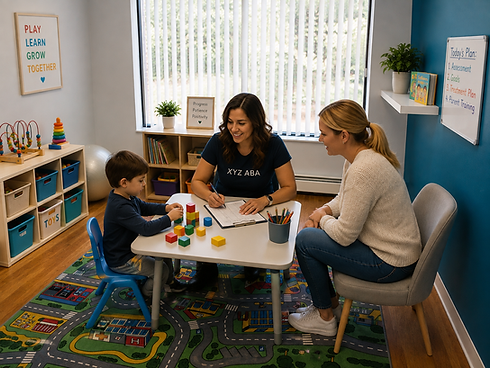
Challenging behaviors don't happen without a reason. Our team looks at what happens before, during, and after a behavior to better understand what a child may be communicating or trying to accomplish. We use that information to develop practical strategies tailored to the child's needs.
1. Understand the Behavior
We observe patterns, identify possible triggers, and assess what may be contributing to the behavior.

2.Build a Plan
A BCBA creates an individualized behavior intervention plan with strategies and goals based on the child's needs.

We help children practice communication, coping, and safer ways to respond to everyday challenges.

We review progress, adjust strategies when needed, and work with families to support skills across daily routines.
Helping Families Manage Challenging Behaviors at Home
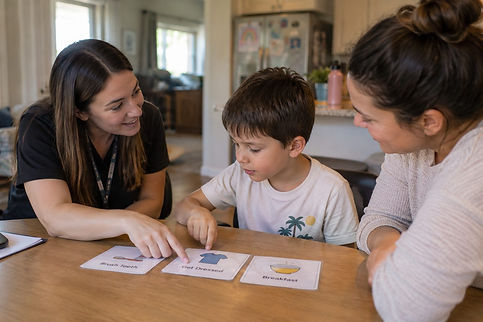
Daily routines, transitions, and unexpected changes can be difficult for children with autism. We help parents use practical behavior strategies to reduce challenging behaviors, improve communication, and build independence at home.
I'M AN ORIGINAL CATCHPHRASE
Behavior Support in Everyday Settings
Children can receive behavior intervention as part of their ABA therapy at home, in our Mountainside clinic, at school or daycare, and in community settings. Support focuses on helping children practice skills where they use them every day.


Functional Behavior Assessment (FBA)

A Behavior Intervention Plan (BIP) is developed by a Board Certified Behavior Analyst (BCBA) to reduce challenging behaviors and teach appropriate replacement skills. Based on a Functional Behavior Assessment (FBA), the plan focuses on understanding why behaviors occur and teaching safer, more effective ways to meet the child's needs.
Behavior plans are individualized, reviewed regularly, and adjusted as children progress. They can be used at home, at school, and in community settings.
Evaluate Your Child
The Earlier your child receive appropriate treatment the better the outcome.